


Most link builders treat resource pages as static artifacts—lists frozen in time when first crawled.This is a fundamental misreading of the web’s sedimentary layers.
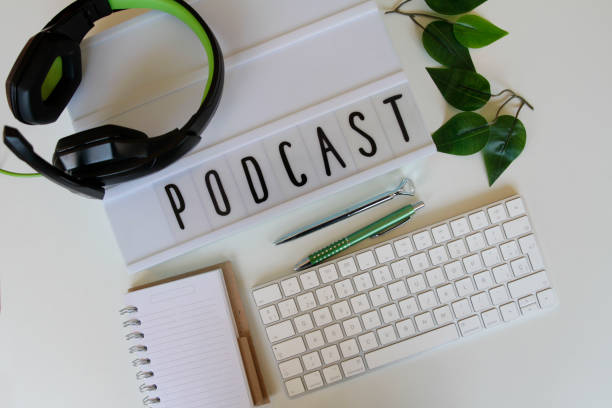
If you’ve been running local SEO campaigns for more than a quarter, you already know the standard influencer playbook is stale. Sending a DM asking for a shoutout or offering a free product in exchange for a mention feels like 2014. The real leverage now sits inside the neglected audio underbelly of local search: the hyper-niche podcast. These shows often have three-digit download counts per episode but command fanatical audience attention, pristine topical relevance, and, critically, show notes pages that are SEO wastelands waiting for your strategic handiwork.
The guerrilla tactic here is not just to appear as a guest. That is Table Stakes 101. The advanced move is to treat every local podcast appearance as a structured backlink acquisition campaign wrapped in a relationship play. You are not selling your service; you are providing high-signal content the host cannot produce on their own. Think of it as a content syndication arbitrage where the currency is audio, the payout is a curated .edu/.gov/.org link profile from the podcast’s guest page, and the compounding interest comes from the host’s social cross-promotion.
Start by mapping your local market’s thematic soundscape. Ignore the top 20 shows on Apple Charts for your city. Those are too broad and their link profiles are already saturated. Instead, drill into the long tail: the “Small Business Owners of [Neighborhood]” podcast, the “Real Estate & Local History” show that interviews a new contractor every week, or the “What’s Happening in [Suburb]” community broadcast. These hosts are perpetually starved for guests who can deliver actionable, non-salesy knowledge. When you reach out, do not lead with “I can help your listeners with SEO.” Lead with a data point they cannot resist: “I just analyzed the local search landscape for your zip code and found that 70% of service businesses in your audience’s area have no structured data markup. I can walk your listeners through the three technical fixes they can implement this weekend.”
Now the real craft: the link. Most local podcasters use WordPress, Squarespace, or Libsyn, and their show notes are an afterthought. They publish a two-sentence summary and a link to your website, usually buried with a generic “find our guest at [URL].” You need to change that before the episode airs. Offer to write the show notes yourself. This is the nuclear option. Craft a 500-word resource guide that includes three subheadings, a table with key data, and, critically, internal links to your own high-value blog posts about local SEO. The host, grateful for the free content, will publish your pre-written notes verbatim. You now own the anchor text and the topical neighborhood.
But you do not stop at the episode page. The deepest value comes from the “if you liked this, check out…” ecosystem. Ask the host if they can include a link to your relevant pillar page in their sidebar or a curated resources section that persists across episodes. Many local podcasts have a permanent “Guests & Resources” page that ranks for “podcast name guests.” Get a contextual backlink there, and you have a semi-permanent editorial vote of relevance for your local entity.
Do not overlook the secondary multiplier: the host’s newsletter. Every local influencer worth their salt has an email list of 500 to 2,000 hyper-engaged locals. Ask to write a short guest blurb for that newsletter, including a trackable UTM link. The traffic may be small, but the click-through rate from a trusted local voice to your landing page will be absurdly high—often 10-15% compared to the 2% you see from display ads. That engagement signal hits Google’s user interaction metrics directly. Bounce rate drops, time on site spikes, and your content starts earning co-visitation signals that whisper “this site solves local problems” to the algorithm.
The final layer is the reciprocal cross-link. Once your episode is live, promote it on your own site. Create a “Podcast Appearances” page with embedded players and a brief summary. Then link back to the host’s show notes from that page. This creates a citation triangle: your site mentions the podcast, the podcast mentions you, and the local influencer sees the linkerati love. That reciprocity solidifies the relationship for future collaborations. Next time you need a quote for a local news article or a link from their chamber of commerce mention, you have a proven asset.
Remember, the goal is not link volume. The goal is link velocity from authoritative local entities. A single .edu link from a university-affiliated podcast (many local shows are run by journalism students or alumni clubs) can dwarf 100 random directory links. By engineering the entire guest experience—from pitch to show notes to newsletter blurb to reciprocal embed—you turn one hour of audio into a persistent, multi-source citation nest. That is the kind of atomic-level SEO work that scales down, not up, and it works precisely because most marketers are too lazy to write someone else’s show notes for them. Be the laziest lazy marketer who does the most work. That is the guerrilla advantage.
Most link builders treat resource pages as static artifacts—lists frozen in time when first crawled.This is a fundamental misreading of the web’s sedimentary layers.

You understand the local pack.You have your GMB categories optimized and your citation consistency is tighter than a drum.

In the ever-evolving landscape of digital marketing, guest posting remains a cornerstone strategy for building authority, earning backlinks, and driving targeted traffic.Yet, amidst the clamor for placements, a critical principle often gets diluted: the non-negotiable necessity of niche relevance.
Get answers to your SEO questions.
