


For the solo marketer or lean startup team, the bottleneck isn’t strategy—it’s throughput.You know the semantic landscape of your niche.
You already know the calculus: high-quality backlinks are the currency of domain authority, but producing the kind of original research or interactive tool that naturally attracts links typically requires a team, a budget, and a dev cycle measured in months. That’s the old model. If you’re operating on a lean startup timeline, you need a different vector. The trick is to stop trying to generate proprietary data from scratch and instead become a master of recombination. Public APIs, open government datasets, and even scraped (legally permissible) sources can be transformed into linkable assets with almost zero capital expenditure, provided you understand the mechanics of semantic novelty and utility.
Start with the data itself. Every major government, from the US Census Bureau to the European Central Bank, exposes RESTful endpoints returning JSON or CSV. The NOAA’s climate API, the Bureau of Labor Statistics’ series IDs, or even something as niche as the Open Library’s API—these are firehoses of structured information that most people never turn into anything linkable. The opportunity is not in hoarding the data, but in presenting it with a unique filter, a comparative angle, or a real-time visualization that solves a specific query your audience is already Googling. For example, take the free API from the SEC’s EDGAR system. With a few lines of Python and a lightweight framework like FastAPI, you can build a micro-tool that lets users compare executive compensation ratios across any two industries. That’s a single-page app with no database, no user accounts, and a hosting bill of zero if you use Vercel’s free tier. The output is a link-worthy asset because it provides instant, custom analysis that a journalist or blogger would otherwise have to manually compile.
The technical execution matters less than the thought pattern. Instead of building a massive content hub, build a single-purpose tool that answers one question better than any manual search. That tool becomes the linkable centerpiece. The SEO play is straightforward: create a page around it with a clear headline, a brief explanation of the methodology, and a call-to-action to embed the tool or share the results. Because you’re using public data, you can also publish the raw underlying dataset as a CSV download—that itself becomes a link magnet for researchers and data journalists who will cite your page as the source. You’re not inventing new data; you’re curating, filtering, and presenting it in a way that saves others time. Time savings is the most underrated link-building hook.
Now consider the angle of temporal relevance. Public APIs often update in real time or near-real time. If you build a tracker—say, a live dashboard of flight delays using the FAA’s ASDI feed (available via third-party APIs like AviationStack’s free tier), or a cost-per-click index using Google Trends’ unofficial API—you now have an asset that stays fresh automatically. No manual content updates. No editorial calendar. The page generates its own news value every time the data shifts. Linkable assets that are “evergreen but dynamic” outperform static guides because they keep drawing new references. Think of it as writing a bot that constantly produces a better version of a Wikipedia table. SEO practitioners love citing tools that give them unique data points for their own articles.
One warning: you must respect rate limits and terms of service. The goal is minimal resources, not legal risk. Use the free tier of an API, cache results aggressively, and never pretend the data is proprietary. Transparency is your insurance. Include a line like “Data sourced from [X] public API. Last updated: [timestamp].” This actually enhances credibility and builds trust with the linking audience. Nobody links to a black box; they link to a known, verifiable source.
The implementation pattern is replicable. Pick a domain you already cover in your content strategy. Identify a question within that domain that requires manual data collection from multiple public sources. Then write a script—Node, Python, or even Google Apps Script—that pulls from those APIs, merges the results, and outputs a clean HTML table or a D3.js chart. Host it on a static site generator like Hugo or 11ty, or even a single HTML file on a subdomain. You can get away with zero server costs using GitHub Pages with a scheduled GitHub Action to refresh the data. The whole thing can be built in a weekend. That’s maximum velocity: from idea to linkable asset in under 48 hours, with no dependencies on a development team.
The strategic play is to create a portfolio of these assets. Each one targets a different long-tail keyword cluster. Because they are lightweight, you can test ten ideas for the cost of one traditional pillar page. Track which ones earn natural backlinks—usually those with a surprising insight or a counterintuitive trend—and double down by expanding features for that specific tool. Over time, you build a network of interlinked micro-assets that collectively boost your site’s topical authority. And because each asset references public data, you become a hub in a network of citations. That’s the kind of link profile that algorithms trust.
The bottom line: stop waiting for budget to create original research. Become a data curator with a bias toward utility. Public APIs are the free ore; your job is to smelt them into tools so useful that other sites have no choice but to link back to you. That’s link building without a budget, and it scales exactly as fast as you can write a fetch call.

For the solo marketer or lean startup team, the bottleneck isn’t strategy—it’s throughput.You know the semantic landscape of your niche.
The mainstream social feed is a noisy, algorithmically curated graveyard of brand-sponsored drivel and viral cat videos.For the savvy web marketer, chasing likes and shares on Twitter or Instagram as a direct ranking signal is a fool’s errand.
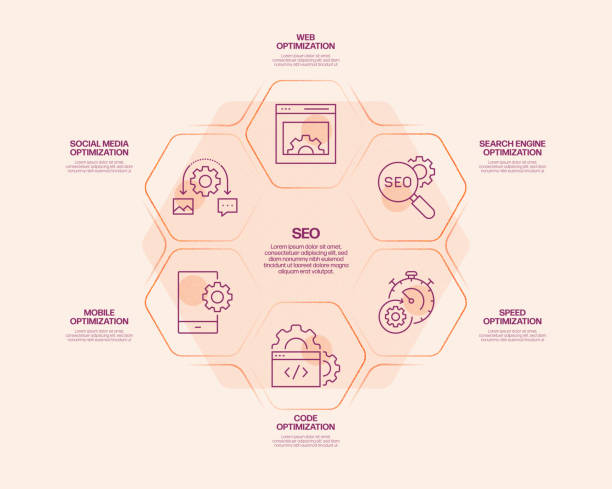
The inner workings of a website can seem like a foreign language, leading many to believe that technical SEO is the exclusive domain of developers.However, with the rise of intuitive platforms and powerful yet accessible tools, you can significantly optimize your site’s technical foundation without writing a single line of code.
Get answers to your SEO questions.
