Fixing Common Crawl Errors Without Developers

Why Crawl Errors Are a Marketer’s Problem, Not Just a Developer’s

As a marketer, your world revolves around visibility, traffic, and conversion. You craft compelling copy, invest in strategic campaigns, and analyze user behavior—all to guide potential customers to your digital doorstep. Yet, none of that effort matters if the door is locked or the address is wrong. This is precisely where crawl errors enter your domain. They are not merely technical glitches for developers to fix in isolation; they are critical roadblocks in your marketing funnel, directly sabotaging your efforts and draining your budget.

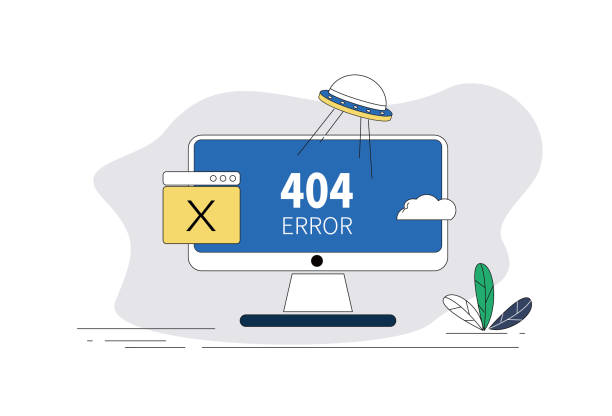
At its core, a crawl error occurs when search engine bots, like those from Google, cannot access or properly read a page on your website. Think of these bots as your most important, yet utterly methodical, visitors. They are the scouts that map your site’s content and report back to the search engine’s index, the digital library that determines search rankings. When these scouts hit a dead end—a “404 Not Found” page, a page blocked by technical directives, or a URL tangled in a redirect loop—they cannot fulfill their mission. The consequence is simple: that page, and any value it holds, becomes invisible in search results. For you, this means a blog post you promoted, a product page you’re running ads for, or a landing page for a new ebook simply does not exist to potential organic visitors. You are, in effect, marketing a ghost.

The impact on your key performance indicators is direct and severe. Consider search engine optimization, a cornerstone of modern marketing. Every crawl error represents a wasted SEO investment. The time spent on keyword research for that page, the careful internal linking built to support it, and the backlinks you may have earned or built through outreach are all devalued. Your site’s overall crawl budget—the finite amount of attention search engines give to your site—is squandered on errors instead of being used to discover your great content. This inefficiency slows down indexing, meaning your timely content may not rank when it matters most, rendering your agile content strategy ineffective.

Beyond SEO, crawl errors directly degrade the user experience you’ve worked so hard to cultivate. Marketing often controls the outbound messages: social media posts, email newsletters, and digital advertisements. If a user clicks a link from your campaign and encounters a broken page, the trust and momentum you’ve built evaporates instantly. This leads to a high bounce rate, lost conversions, and a damaged brand perception. That user is unlikely to click your next ad or open your next email. Furthermore, errors on critical pages like product categories or service pages create tangible revenue loss. A customer ready to buy who encounters a server error is a customer who will likely find a competitor whose digital storefront is in order.

Therefore, caring about crawl errors is about protecting your marketing ROI and owning the customer journey. While a developer will correct the technical fault, you are the one who must prioritize which errors to fix first based on business impact. Is the broken page a legacy URL with historic traffic? Is it a new landing page for a paid campaign? You provide the context that turns a technical task into a strategic action. By monitoring crawl error reports in tools like Google Search Console—a practice that should be as routine as checking campaign analytics—you shift from being a victim of technical debt to a proactive guardian of your marketing performance. You ensure that the traffic you work so hard to generate has a smooth, functional pathway to conversion. In the end, a website is your primary marketing asset, and its technical health is foundational to every strategy you deploy. Ignoring crawl errors is not an option; it is akin to meticulously planning a grand opening while forgetting to unlock the front door.


Image
Knowledgebase

Recent Articles

How to Uncover Quick Win Keywords Using Free SEO Tools

How to Uncover Quick Win Keywords Using Free SEO Tools

The quest for search engine visibility often begins with keyword research, but the landscape can feel overwhelmingly competitive.The strategic pursuit of “quick win” keywords offers a solution, targeting terms with a high likelihood of ranking relatively quickly to generate early momentum.

Why Long-Tail Keywords Are the Cornerstone of Guerrilla SEO Strategy

Why Long-Tail Keywords Are the Cornerstone of Guerrilla SEO Strategy

In the high-stakes digital arena, where corporate giants dominate with vast budgets and algorithmic authority, the guerrilla marketer must operate with precision, resourcefulness, and tactical cunning.For such a strategist, the cornerstone of any effective search engine optimization effort is not the broad, coveted head term, but the specific, conversational long-tail keyword.

Guerrilla SEO: The Art of Data-Driven Storytelling

Guerrilla SEO: The Art of Data-Driven Storytelling

In the ever-evolving arena of digital marketing, where competition for attention is fierce and algorithmic landscapes shift like sand, a more unconventional and resourceful discipline has emerged: Guerrilla SEO.At its core, Guerrilla SEO is a mindset and a set of tactics that prioritize creativity, speed, and opportunistic leverage over large budgets and traditional, plodding optimization campaigns.

F.A.Q.

Get answers to your SEO questions.

How Should I Interpret Coverage Reports for a Lean Site?
The Coverage report is your site’s health dashboard. Guerrilla focus is on errors and warnings. “Submitted URL blocked by robots.txt” is a critical error—you’re actively hiding content. “Indexed, though blocked by robots.txt” is a major warning. Fix these first to unlock hidden assets. Valid with warnings (like ’soft 404’) often indicate thin content; consider consolidating or boosting those pages.
How do I operationalize these unconventional keywords into a content plan?
Don’t just dump them into a blog calendar. Map them to your existing content silo or topic cluster structure. Group unconventional keywords by intent and stage in the buyer’s journey. Use them to create “bridge content” that funnels niche traffic toward core commercial pages. For example, a guide targeting a long-tail troubleshooting question (awareness) should link to a product feature page (consideration). This builds a topical authority net that captures traffic at all levels of specificity and systematically guides users toward conversion.
How Do I Measure the ROI of GuerillaSEO Efforts Compared to Standard Campaigns?
Track micro-conversions and velocity. Beyond standard metrics (Domain Rating, traffic), monitor the rate of acquisition. Did that digital PR stunt generate 5 quality backlinks in a week, a velocity impossible via standard blog outreach? Use UTM parameters on all guerilla campaign links. Segment rankings for keywords targeted specifically by these tactics. The ROI is often in the accelerated timeline and lower CAC for links. Compare the cost and time-per-acquisition of a guerilla link versus one from a standard guest post campaign. The differential is your guerilla ROI.
How do we ethically “seed” review requests without being spammy?
Segment your customer base and deploy hyper-personalized requests. Use your CRM to trigger requests based on specific, positive interactions (e.g., “Loved the solution we built for your X project?“). For B2B, leverage LinkedIn. For B2C, use SMS with the customer’s name and purchased item. This moves beyond a generic blast, demonstrating you value the specific relationship, which increases compliance and feels less transactional. Automation here is for timing, not message generation.
Which Free Tools Are Essential for the Workflow?
Your core toolkit should include: Check My Links (for instant page-level scanning), Screaming Frog (free version crawls 500 URLs to find broken links on your own or discovered sites), Hunter.io (free tier for finding email addresses), and Google Search Operators (your most powerful free prospecting tool). For vetting, use MozBar (free) to check domain authority of target pages. A simple spreadsheet is your CRM. This lean stack handles discovery, vetting, and outreach without a budget.
Image