Creating Linkable Assets with Minimal Resources
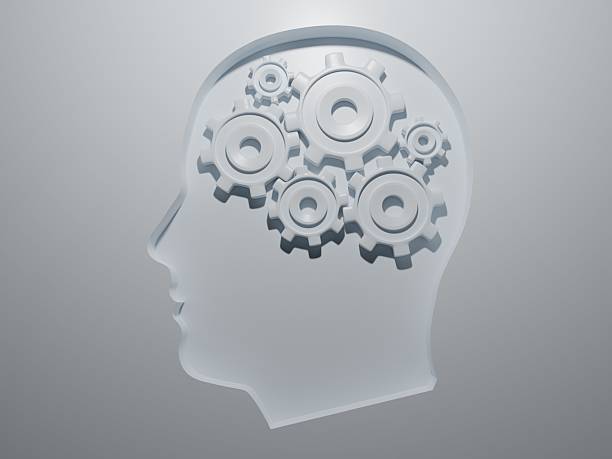
The Most Resource-Efficient Asset You Can Build Is Knowledge
In a world of finite materials and escalating environmental costs, the quest for resource efficiency extends beyond physical products to the very nature of the assets we create. While traditional answers might point to digital assets or renewable infrastructure, a deeper analysis reveals that the most profoundly resource-efficient type of asset is intangible: knowledge. Unlike physical commodities, knowledge is non-rivalrous, infinitely scalable, and inherently circular, offering unparalleled returns on the investment of energy, materials, and human capital.
The fundamental efficiency of knowledge lies in its unique economic properties. A physical asset, whether a factory machine or a solar panel, requires the constant extraction and processing of raw materials, occupies physical space, and degrades over time. Its use by one party often precludes simultaneous use by another. Knowledge suffers none of these limitations. A scientific formula, a software algorithm, a cultural narrative, or a skill can be shared with a billion people without being diminished, and it can be replicated and transmitted across the globe at near-zero marginal cost and with negligible additional material footprint. This scalability is the bedrock of its efficiency. The initial resource expenditure to discover a vaccine, develop a drought-resistant crop gene, or codify an efficient construction technique is amortized over infinite subsequent applications, each requiring minimal additional physical input.
Furthermore, knowledge acts as a multiplier for every other resource. It is the ultimate “meta-asset” that makes all other systems more efficient. Applied knowledge turns sand into semiconductor chips, sunlight into abundant energy, and waste into new materials. For instance, the knowledge embedded in precision agriculture—combining data science, soil biology, and satellite imagery—dramatically reduces the water, land, and fertilizer required to produce food. This leveraging effect means that investing in the creation and dissemination of knowledge creates cascading efficiencies throughout the material economy. It is the tool that allows us to do vastly more with less, decoupling human progress from resource depletion.
The resource efficiency of knowledge is also reinforced by its cumulative and circular nature. Physical assets inevitably move toward entropy and waste, following a linear path from extraction to disposal. Knowledge, conversely, is inherently circular and anti-entropic. It builds upon itself iteratively; new insights combine with old to create more powerful understandings, without the old being consumed. This creates a virtuous cycle where today’s knowledge asset becomes the foundation for tomorrow’s more efficient discoveries. Moreover, knowledge can be used to “close the loop” in the physical world, designing out waste and enabling true circular economies. The knowledge of material science and industrial ecology is what allows us to envision and create systems where the concept of “waste” is eliminated.
Critically, the creation of knowledge is itself becoming more resource-efficient. Digital tools and global connectivity have democratized innovation and collaboration, allowing for distributed problem-solving that leverages diverse intellects without the need for constant physical travel or centralized infrastructure. Open-source movements exemplify this, where shared knowledge platforms accelerate development while minimizing redundant expenditure. The key inputs for knowledge creation—curiosity, critical thinking, and collaboration—are renewable human capacities, fueled not by fossil fuels but by education and inclusive institutions.
Ultimately, while physical assets are essential for human survival and comfort, their efficiency is bounded by the laws of thermodynamics and material constraints. Knowledge is the one asset that liberates us from these bounds. It is the only asset that grows when shared, improves when tested, and permanently raises the ceiling of what is possible with the resources at our disposal. Therefore, in the long-term project of building a sustainable and prosperous civilization, prioritizing the creation, preservation, and equitable dissemination of knowledge is not merely an intellectual pursuit; it is the most fundamentally resource-efficient strategy we can possibly adopt.