


The landscape of digital influence is a crowded, noisy bazaar.Traditional outreach, with its templated emails and spray-and-pray tactics, now lands with a thud in the inbox, instantly categorized as spam.
Every serious marketer knows Google’s autocomplete is a hollowed-out oracle. The suggestions are aggressively curated, politically sanitized, and commercialized to the point of echo-chamber homogeneity. So when you’re hunting for low-competition, high-intent queries, the last place you should look is the same predictive text feed your competitors are scraping with the same $49 tools. The real arbitrage lives in the divergence between autocomplete engines across vertical platforms. By systematically querying the suggest endpoints of YouTube, Etsy, Reddit, and even niche BBS engines like Discourse or phpBB, you can surface query formulations that Google’s algorithm actively suppresses or normalizes away. These are the jagged edges of user intent, and they’re virtually untouched by mainstream SEO software.
The core concept is simple but brutally effective: different platforms optimize their autocomplete for different conversion goals. YouTube predicts queries that maximize watch time, so it surfaces long-tail phrasings that imply narrative or instructional intent. Etsy optimizes for purchase readiness, so its suggestions skew heavily toward material descriptors and qualifiers like “handmade,“ “vintage,“ “under $20.“ Reddit’s autocomplete, if you hit it through their legacy API, reflects conversational urgency and unpolished natural language. When you run the same seed phrase through these disparate engines and compare the resulting suggestion sets, the discrepancies reveal intent layers that Google has flattened. For example, “best ergonomic mouse” might yield “best ergonomic mouse for small hands” on Google, but YouTube suggests “best ergonomic mouse for intense gaming sweat resistant grip” and Etsy offers “best ergonomic mouse for arthritis carpal tunnel relief.“ That arthritis modifier signals a high-intent user with a chronic condition, likely ready to pay a premium. Google’s version buries that nuance behind generic commercial head terms.
To operationalize this, you don’t need ML. A simple Python script that hits each platform’s suggest endpoint with a list of seed keywords, normalized to lowercase, stripped of diacritics, and deduplicated via Levenshtein distance, will yield a raw corpus. The real processing begins when you cluster these divergent suggestions using TF-IDF or, more elegantly, by computing token-level frequency differentials against Google’s suggestions for the same seeds. Any term that appears disproportionately on non-Google engines is a signal of suppressed intent. The classic examples are profanity, regional slang, and misspellings. Google autocorrects “ergonomic mouse for big hands” to “large hands,“ but Etsy users type “fat paws” and actually buy products from that phrasing. A misspelling like “ergonmic mouse” has near-zero search volume in Keyword Planner, but if Etsy autocomplete surfaces “ergonmic mouse for wrist support” as a live suggestion, that means real users are typing it frequently enough to influence the prediction model. The competition is negligible, yet the searcher knows exactly what they want. That is the definition of a high-intent, low-competition keyword.
The true power of this method is in the cross-platform semantic joins. Take the top 200 suggestions from YouTube and the top 200 from Etsy for a broad seed like “wireless keyboard.“ Intersect the token sets, then subtract all tokens that appear in Google’s autocomplete. You’re left with a shortlist of modifiers that define a unique attitudinal or situational segment. Terms like “programmable,“ “silent,“ “low profile,“ and “mac-friendly” are common. But you’ll also find “staggered,“ “ortholinear,“ “hot-swappable” — jargon from enthusiast communities. Google’s autocomplete generally ignores niche jargon because it lacks aggregated volume, but those terms have astronomical intent density. A user typing “ortholinear wireless keyboard” isn’t browsing. They’re ready to write a check.
The implementation is straightforward. Set up a cron job that hits these endpoints daily, storing raw JSON responses. Aggregate the data over a week to smooth out transient noise. Then compute a divergence score for each candidate phrase using a weighted z-score that factors in suggestion rank and cross-platform frequency. The output isn’t a list of keywords to shove into your content calendar. It’s a map of untapped semantic terrain. You take a phrase like “ultra silent wireless keyboard for open office complaints” — which appears only on YouTube’s suggestions, with zero Google search volume — and you use it to inform your content hierarchy. You build a page that directly addresses that absurdly specific pain point, using the authoritative language of the community that produced it. Because no mainstream tool reports this phrase, your page has no algorithmic competition. The only bar is matching the searcher’s intent with impeccable precision.
So stop treating autocomplete as a single source of truth. Treat it as a distributed sensor network. Each platform’s suggest algorithm is a lens that magnifies a different facet of demand. By reading the diffraction pattern across multiple lenses, you can see the full spectrum of human intent — especially the wavelengths that Google deliberately filters out. That’s where the profit lives, quietly waiting for someone smart enough to look outside the one box everyone else is staring into.

The landscape of digital influence is a crowded, noisy bazaar.Traditional outreach, with its templated emails and spray-and-pray tactics, now lands with a thud in the inbox, instantly categorized as spam.

The refactored search engine does not care about your keyword planner export.Google has spent a decade moving from exact-match strings to neural embeddings, entity vectors, and query intent inference.
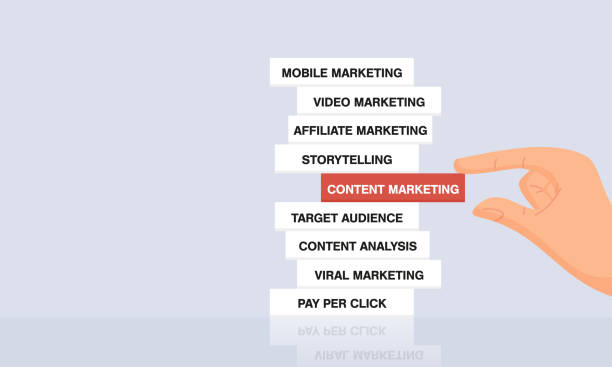
In the digital landscape where attention is scarce and intent is paramount, structuring content around user question phrases has emerged as a foundational strategy for meaningful engagement.This approach moves beyond mere information delivery to create a dynamic, conversational experience that directly addresses the reader’s curiosity and needs.
Get answers to your SEO questions.
