

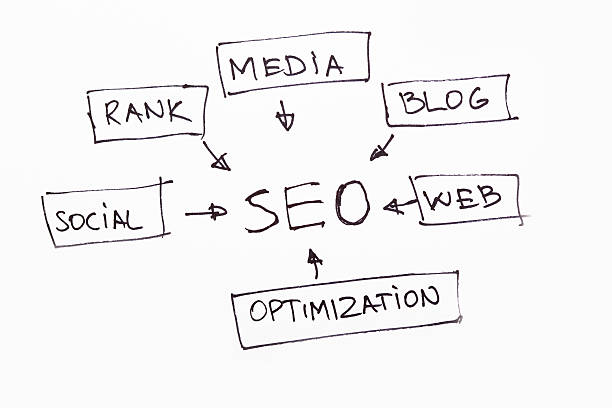
Guerrilla SEO, by its very nature, is a discipline of asymmetrical warfare.It is the practice of achieving significant search visibility without the budget, resources, or brand authority of entrenched competitors.
Municipal open data portals are an asymmetrical weapon for startups that want to own a geographic niche. While your competitors are still crafting “best coffee in Brooklyn” listicles, you can be ingesting the city’s raw operational feeds—building permits, 311 requests, health inspection scores, liquor license applications, and zoning agenda PDFs—and compiling them into a responsive, edge-dense content fabric. The hack is not collecting data; that’s trivial with Socrata or CKAN APIs. The hack is converting the city’s own informational heartbeat into a semantic layer that matches how humans actually ask about their immediate environment. A query like “why is the sidewalk blocked on 23rd and Valencia” rarely has a conventional page. You can be that page, formed from permit timestamps and a street work order feed, wrapped in a narrative that a journalist or local Facebook group will actually link to.
The technical stack matters less than the interpretive loop. You want a scheduled scraper that pulls delta updates every thirty minutes, geocodes coordinates to a specific census block group, and then runs a templated generator that emits a structured HTML page with schema.org annotations. But schema alone is not enough. Google’s worker models increasingly reward corroboration between local content, user intent, and entity relationships. That means you need to model the neighborhood as a graph: the permit references a parcel, the parcel references a business, the business references a street segment. Use `LocalBusiness` with `additionalProperty` for permit numbers, `CivicStructure` for temporary street closures, and `FAQPage` to prepopulate the obvious follow-ups—“how long will construction last,“ “will my parking spot be affected,“ “who is the contractor.“ Those FAQ snippets become high-friction click targets in the “People also ask” panels, earning you visibility without ever ranking in the map pack.
But raw data is a trap for thin content. Google’s Helpful Content Update is specifically hunting for automated, low-value pages. The counterpunch is a two-tier publication model. Tier one is the “data brief”: a programmatically generated summary with timestamps, locations, and a sterile disclaimer. Tier two is a weekly editorial overlay where a human—perhaps you, perhaps a freelance local-news junkie—adds context: how a new contractor’s permit history indicates a pattern of noisy night work, or why three concurrent liquor license transfers suggest a corridor shifting toward late-night culture. That overlay is what earns E-E-A-T signals. It’s not opinion; it’s synthesis. And synthesis is the one thing your scraping stack cannot fake.
A more devious angle is temporal mapping. Most static content rots; your civic data pages can live. Capture snapshots of city datasets daily and compute diffs. A page that says “this intersection has four pothole reports this week, up from zero in the previous eight weeks” converts raw 311 data into a living metric. Google’s freshness algorithms will see the page changing, and each change triggers a recrawl. More importantly, you now have a linkable asset for local media. A spike in street closure permits before a city festival is not just a dataset—it’s a story. When you publish it first, you become the source, and local blogs will cite you. Those citations are authoritative co-citations that propagate directly into your domain’s topical trust.
You should also exploit “political geography” mismatch. City agencies use legal naming conventions—council districts, planning areas, historic overlay zones—that rarely match the colloquial neighborhood names people use on Reddit or Nextdoor. A map layer that reconciles “Council District 7” with “The Triangle” allows you to bridge both vocabularies in your content. Write the title as “What the new upzoning of Council District 7 means for Triangle renters” and you’ll capture two distinct search groups. Additionally, bind your content to the same geospatial ontology that Google uses. That includes `place`/`address` and, more importantly, the underlying geometry of your locality. Publish the bounding box as a dataset, link to it from within your content, and use visible coordinates in your header. This tells crawlers that your page is about a specific parcel, not a fuzzy twenty-mile radius.
Do not overlook the ugly data. Graffiti removal schedules, standing water complaints, and rodent inspection statistics are low glamour but zero competition. A pest-control startup can dominate the query “rat sightings in Echo Park” by turning a public health department dataset into a hyperlocal risk index. That’s not spam; that’s a public service. You are essentially building a tiny vertical search engine for a city’s own dirty laundry. If you can automatically generate a paragraph that correlates trash pickup delays with restaurant health grade drops, you’ve produced insight that no other site has. That level of granularity is impossible to match with general SEO playbooks.
Finally, acknowledge the legal and technical footguns. Check each dataset’s terms of service; many require attribution, some forbid commercial rehosting. Scrub personally identifiable information because an unredacted permit with a resident’s name is a privacy violation. And resist the urge to scale across every zip code until you’ve nailed one microdistrict. A single, deeply maintained block that updates in near real-time will outperform a network of thin, stale pages. The goal is not to own a keyword. The goal is to become the reference log for a physical place, one that the city itself might use. That is the guerrilla move: outsource your content strategy to the government’s own data pipeline, then add the editorial salt it cannot generate on its own.

Guerrilla SEO, by its very nature, is a discipline of asymmetrical warfare.It is the practice of achieving significant search visibility without the budget, resources, or brand authority of entrenched competitors.

Canonical tags are the silent, stubborn workhorses of technical SEO.You set them once, then spend the next eighteen months discovering that a launch engineer buried an `alternate` link in a React Helmet snippet or that your CMS started emitting self-referencing canonicals on paginated category pages.

Forget what you’ve heard.You do not need a massive marketing budget to become an authority in your space.
Get answers to your SEO questions.
