

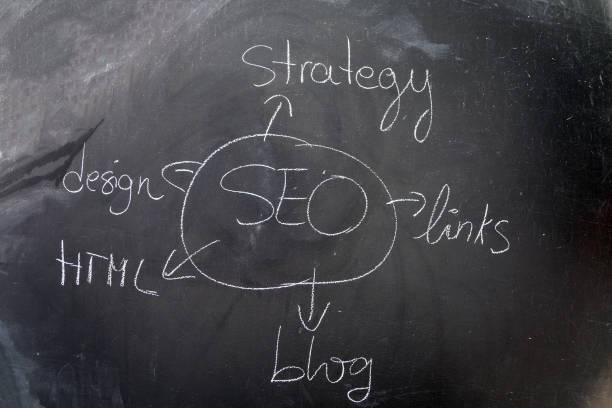
In the intricate world of search engine optimization, a fixation on keywords can be a siren’s call, luring practitioners toward rocky shores.While keywords are the foundational vocabulary, they are merely the first chapter in a much richer story.
The dominance of Ahrefs in the SEO toolkit is undeniable, offering a powerful, all-in-one suite for backlink analysis and prospecting. However, its premium cost places it out of reach for many individuals, startups, and agencies managing numerous clients. This leads to a critical question: is it possible to automate these essential SEO tasks without relying on Ahrefs? The answer is a resounding yes, though it requires a shift in mindset from relying on a single, polished interface to constructing a flexible, multi-tool ecosystem powered by automation.
The foundation of any alternative approach lies in accessing reliable backlink data. While no free tool matches the sheer volume of Ahrefs’ index, several reputable sources provide substantial data that can be harnessed. Google Search Console is the prime starting point, offering a verified list of links Google knows about for your own site, which can be exported and analyzed. Public web crawlers like Moz’s Link Explorer and SEMrush offer limited free queries, while platforms like Majestic maintain robust historical indexes. For prospecting, leveraging Google’s own operators—such as `site:`, `link:`, and `intitle:`—remains a timeless, if manual, technique to discover potential link sources. The initial challenge, therefore, is not a lack of data but its fragmentation across disparate sources.
This is where automation becomes not just beneficial but essential. The core strategy involves using programming scripts, primarily in Python, to act as the connective tissue between these data sources and your analytical goals. Through APIs, where available, a script can programmatically extract backlink data from the limited free tiers of various platforms, effectively pooling quotas to create a more comprehensive dataset. For instance, one could sequentially check a target domain across several tools’ APIs to gather a more complete link profile than any single free tool could provide. When APIs are not an option, automated web scraping—conducted ethically and in compliance with a site’s `robots.txt`—can extract publicly displayed link data from competitor pages or search engine results pages (SERPs).
The automation extends powerfully into prospecting. A script can be designed to scrape search results for complex queries like `“write for us” + “your industry”` or `intitle:“resources” + “your topic”`. More sophisticated prospecting can involve analyzing the backlink profiles of ranking competitors to identify common, recurring linking domains (bloggers, industry directories, resource pages) that represent tangible outreach opportunities. This process of identifying link patterns and aggregating contact domains can be fully automated, saving hours of manual research. Furthermore, natural language processing (NLP) libraries can be integrated to scan the content of potential prospect pages to assess relevance, automatically filtering out low-quality or off-topic sites.
However, this DIY automation path is not without its significant trade-offs. The most prominent is the substantial initial investment of time and technical skill required to build, maintain, and troubleshoot these automated systems. An SEO professional must possess or acquire scripting and data-wrangling competencies. The resulting system will also likely lack the polished, real-time dashboard and predictive metrics of Ahrefs, presenting data that requires further manual interpretation. There are also ethical and practical limits; over-aggressive scraping can get your IP blocked, and the stitched-together data may have gaps or inconsistencies compared to a unified index. Crucially, this approach automates the collection and initial filtration of data, but the nuanced human judgment required for effective outreach—assessing website quality, personalizing communication, building relationships—cannot and should not be fully automated.
In conclusion, automating backlink analysis and prospecting without Ahrefs is not only possible but a viable and increasingly common practice for the technically inclined SEO. It represents a shift from a capital-intensive expense to a time-intensive, skill-based investment. By strategically leveraging free data sources and connecting them with custom automation, practitioners can build a tailored, scalable system for discovery and analysis. While it may lack the convenience and depth of the industry giants, this approach offers unparalleled flexibility, cost control, and a deeper understanding of the data pipeline itself. Ultimately, the decision hinges on whether one prefers to wield a ready-made power tool or master the craft of building their own.
In the intricate world of search engine optimization, a fixation on keywords can be a siren’s call, luring practitioners toward rocky shores.While keywords are the foundational vocabulary, they are merely the first chapter in a much richer story.

For the startup marketer who has already scraped the standard citation aggregators, built out DataAxle and NeustarLocaleze, and manually submitted to the thirty-seven regional chambers that actually update their databases quarterly, the remaining leverage lies in the unclean corners of the digital graph.The conventional wisdom says to chase citation volume, but volume without structural authority is just noise.

In the high-stakes arena of digital visibility, guerrilla SEO campaigns emerge as the ambitious underdog’s strategy.Born from limited budgets and a desire to disrupt established competitors, these campaigns rely on creativity, agility, and unconventional tactics to achieve rapid results.
Get answers to your SEO questions.
